Most steel framing spec sheets in Ontario live inside a PDF that nobody can search. When a drywall contractor in Toronto needs to know whether a 6″ slotted track is available in 16 gauge, or what flange size ships on a deep track, the answer usually takes a phone call.
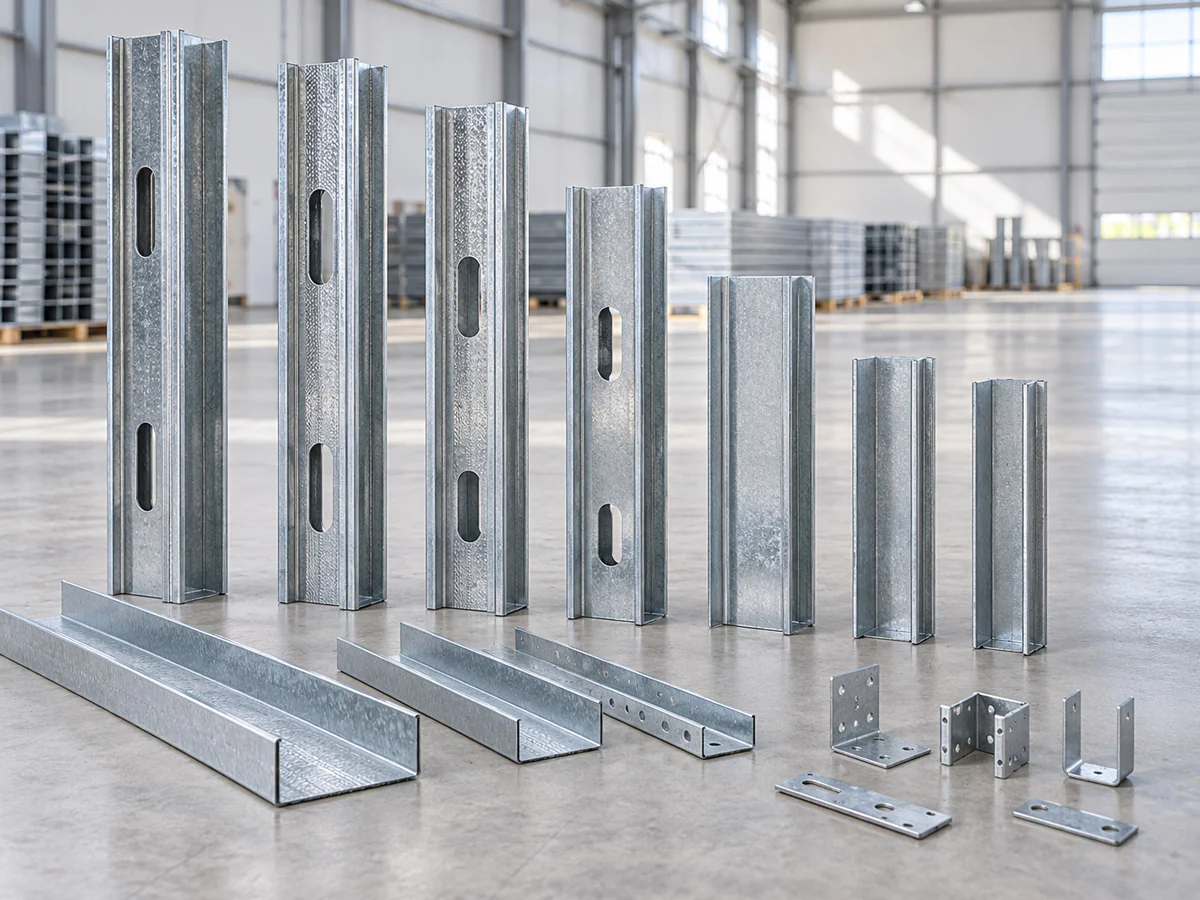
This page removes that step. Below are the actual manufactured dimensions for every profile Saturn Metal produces at our Toronto plant — widths, flange sizes, gauges and stock lengths — along with the gauge-to-thickness conversions you need when a drawing calls out mils instead of gauge.
Saturn Metal Inc. is a cold-formed steel framing manufacturer based in the Greater Toronto Area. We roll these profiles ourselves from Canadian-made galvanized steel, which means anything in the tables below can also be produced in a custom width, gauge or length for your project.
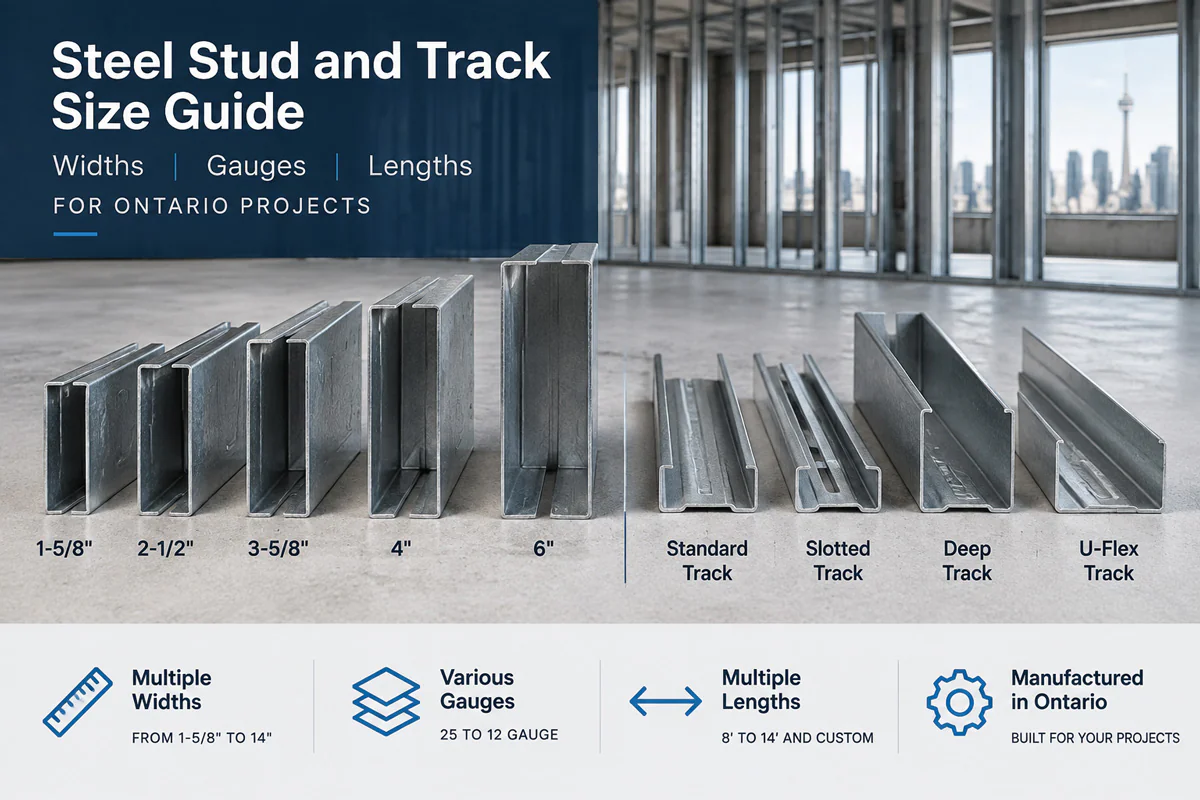
Steel Stud Gauge to Thickness Conversion
Ontario drawings and submittals increasingly specify steel thickness in mils rather than gauge, because gauge is a legacy sheet-metal designation and mils is what the North American cold-formed steel standard (CSA S136 / AISI S100) actually references. Both appear on job sites, so this is the conversion you need:
| Gauge | Design thickness (mils) | Design thickness (inches) | Typical use |
|---|---|---|---|
| 25 | 18 mils | 0.0188″ | Interior non-load-bearing partitions |
| 22 | 27 mils | 0.0283″ | Taller interior partitions, light ceiling framing |
| 20 (drywall) | 30 mils | 0.0312″ | Non-structural, higher walls and impact areas |
| 20 (structural) | 33 mils | 0.0346″ | Light load-bearing, exterior infill |
| 18 | 43 mils | 0.0451″ | Load-bearing walls, curtain wall framing |
| 16 | 54 mils | 0.0566″ | Structural framing, heavier commercial assemblies |
| 14 | 68 mils | 0.0713″ | Heavy structural, mid-rise load-bearing |
| 12 | 97 mils | 0.1017″ | Heaviest structural applications, jamb studs |
The critical distinction: 20 gauge exists in two versions. Drywall 20 gauge (30 mils) is non-structural. Structural 20 gauge (33 mils) is not. Specifying “20 gauge” on a load-bearing wall without saying which one is one of the most common sources of a rejected submittal in Ontario commercial work. Always confirm mils.
Light Gauge Steel Stud Sizes
Light gauge studs are the C-shaped vertical members in non-load-bearing interior partitions — offices, tenant improvements, apartment demising walls, corridors.
| Property | Available |
|---|---|
| Widths | 1-5/8″, 2-1/2″, 3-5/8″, 4″, 6″ |
| Flange size | 1-1/4″ |
| Gauges | 25, 20 |
| Stock lengths | 8′, 9′, 10′, 12′, 14′ — custom lengths produced to order |
How to pick a width: 1-5/8″ suits furring and shallow chase walls. 2-1/2″ is the standard for light office partitions. 3-5/8″ is the default for most commercial interior walls and gives room for standard batt insulation. 4″ and 6″ are used where you need extra height capacity, plumbing clearance or a deeper acoustic cavity.
Heavy Gauge Steel Stud Sizes
Heavy gauge studs carry load. They are used in load-bearing walls, curtain wall backup framing, exterior infill and mid-rise steel-framed construction.
| Property | Available |
|---|---|
| Widths | 4″, 6″, 8″, 10″, 12″, 14″ |
| Flange sizes | 1-5/8″, 2″, 2-1/2″, 3″ |
| Gauges | 20, 18, 16, 14, 12 |
| Stock lengths | Produced to order |
Heavy gauge stud selection is an engineering decision, not a catalogue decision. Width, gauge and flange all interact with wall height, spacing and the applied load. Send us the wall schedule and our technical team will confirm the profile against your loads before you order.
Steel Track Sizes: Standard, Deep, Slotted and U-Flex
Track is the horizontal member that receives the studs at the top and bottom of the wall. Four types cover almost every condition, and choosing the wrong one is a more common — and more expensive — mistake than choosing the wrong stud.
Standard Track
| Property | Available |
|---|---|
| Widths | 1-5/8″, 2-1/2″, 3-5/8″, 4″, 6″, 8″, 10″, 12″, 14″ |
| Flange size | 1-1/4″ |
| Gauges | 25, 20, 18, 16, 14, 12 |
| Stock lengths | Any length |
Use it for: ordinary top and bottom track on partitions where the structure above does not move relative to the wall.
Deep Track
| Property | Available |
|---|---|
| Widths | 1-5/8″, 2-1/2″, 3-5/8″, 4″, 6″, 8″, 10″, 12″, 14″ |
| Flange sizes | 2″, 2-1/2″, 3″ |
| Gauges | 25, 20, 18, 16, 14, 12 |
| Stock length | 10′ |
Use it for: deflection head conditions where the stud needs to slip vertically inside a taller flange, and anywhere you need stronger stud retention than a 1-1/4″ flange gives.
Slotted Track
| Property | Available |
|---|---|
| Widths | 2-1/2″, 3-5/8″, 4″, 6″, 8″, 10″, 12″, 14″ |
| Flange size | 2-1/4″ |
| Gauges | 20, 18, 16, 14, 12 |
| Stock length | 10′ |
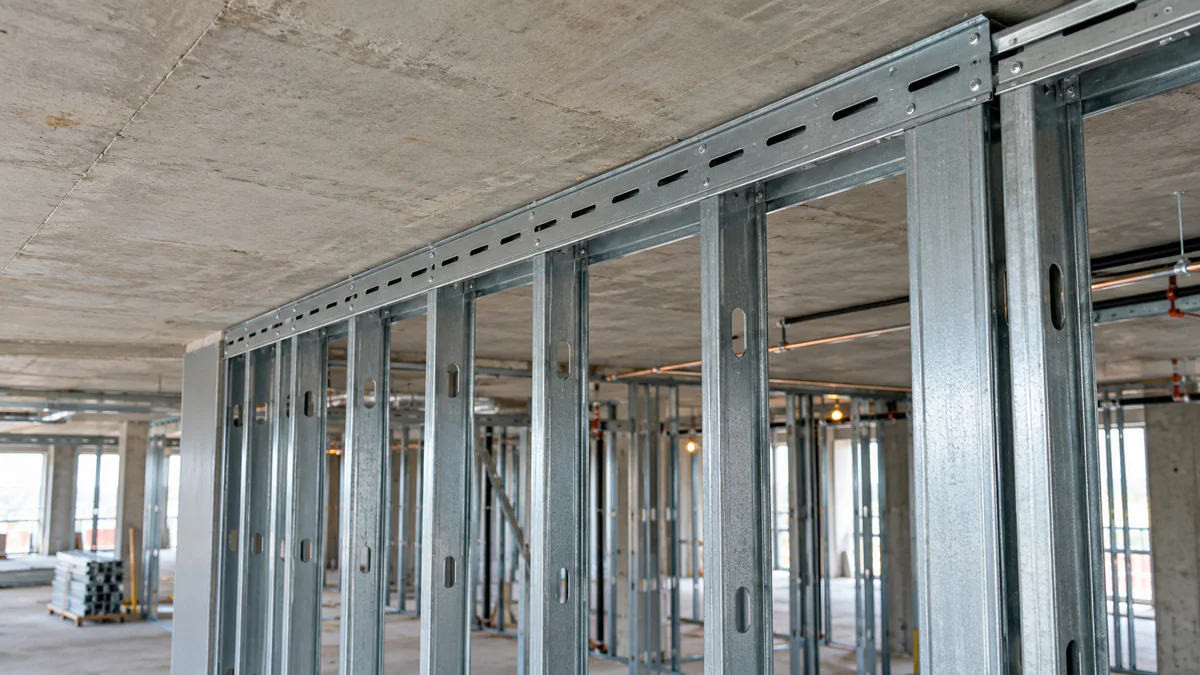
Use it for: top-of-wall deflection joints under a structural slab or beam that will deflect. The vertical slots let you screw through the track into the stud while still permitting movement — you get a fixed, rattle-free connection that still slides.
U-Flex Track
| Property | Available |
|---|---|
| Widths | 2-1/2″, 3-5/8″, 6″ |
| Flange size | 1-1/4″ |
| Gauges | 25, 20 |
| Stock lengths | 8′, 10′ |
Use it for: curved and radius walls, bulkheads and architectural drywall features. The pre-notched flange bends to a radius without kinking.
Channel and Accessory Sizes
| Product | Sizes | Gauges | Lengths |
|---|---|---|---|
| Resilient Channel | — | 25 | 12′ |
| Furring Channel | 7/8″ flange | 25, 20 | 10′, 12′ |
| Bridging / Carrying Channel | 1-1/2″, 3/4″, 1/2″ | 18 | 12′ |
| 90° / 130° Corner Bead | 1-1/4″ × 1-1/4″ | — | 8′, 9′, 10′, 12′ |
| L-Track / Angle | 1-1/4″×1-1/4″, 1-1/2″×1-1/2″, 1″×2″, 2″×2″ | 16 | 10′ |
| Z-Bar | 3-1/2″ to 6″ web; 1-1/4″ to 2″ flange | 18, 16, 14, 12 | Custom |
| Windbrace | 2″ width | 20 | 11′-3″ |
| Flat Strips | — | 25, 20, 18, 16, 14, 12 | 10′ |
| J-Trim | 3/8″, 1/2″, 5/8″ | — | 8′, 10′ |
| L-Trim | 1/2″, 5/8″ | — | 8′, 10′ |
Shaftwall and CH Stud Sizes
Shaftwall assemblies enclose elevator shafts, stairwells and mechanical service cores. In Ontario these are fire-rated assemblies, so the framing must match the tested assembly listed in the drawings — substituting a profile is not a field decision.
| Property | Available |
|---|---|
| Widths | 2-1/2″, 4″, 6″ |
| Gauges | 25, 20, 18, 16, 14, 12 |
| Stock lengths | 8′, 9′, 10′, 12′, 14′ — custom lengths produced to order |
The matching J-Track / J-Runner perimeter profile is produced in 2-1/2″, 3″, 4″ and 6″ widths with a 2-1/4″ leg, in 25 and 20 gauge, in 10′ lengths.
Clip and Connector Dimensions
Clips are the components most often left off a material take-off, and the ones most likely to stop an install. Three cover the majority of Ontario commercial work:
| Clip | Length | Width | Flange / Gauge | Function |
|---|---|---|---|---|
| Deflection Side Clip | 5.87″ | 3″ | 1.5″, 3.5″ flange | Manages floor deflection and structural movement at the head of the wall |
| Webslide Clip | 4.5″, 5.5″ | 3.5″ | 1.5″ flange | Allows controlled vertical slip in curtain wall and deflection assemblies |
| Bridging Clip | 3-1/4″, 5-1/2″, 7-1/2″ | 1.5″ | 16 gauge | Secures bridging channel through stud knockouts to resist stud rotation |
Which Standards Apply in Ontario
Steel framing on an Ontario job is governed by a short list of documents. Knowing which one applies tells you what to specify:
- ASTM C645 — non-structural steel framing members. This is what governs interior partition studs and track.
- ASTM C955 — load-bearing (transverse and axial load) steel studs, runners and bracing.
- CSA S136 / AISI S100 — the North American design specification for cold-formed steel structural members. Referenced by the Ontario Building Code for structural steel framing design.
- Ontario Building Code — Part 9 for housing and small buildings, Part 4 for structural design of larger buildings.
- ASTM A653 — the galvanized coating designation (G40, G60, G90) on the sheet itself. Coating class matters for exterior and high-humidity assemblies.
Saturn Metal produces to these standards using Canadian-made galvanized steel, and we can supply documentation for submittal packages on request.
How to Specify Steel Framing Without a Rejected Submittal
1. Confirm structural or non-structural first
This single decision drives everything else — which ASTM standard applies, whether 20 gauge means 30 mils or 33 mils, and whether an engineer needs to stamp the wall. Settle it before you look at any width.
2. Specify in mils, not gauge
Gauge is ambiguous. Mils is not. If the drawing says gauge, write the mils equivalent on your purchase order so there is no interpretation left at the plant.
3. Match track flange to the head condition
A standard 1-1/4″ flange track at a deflecting slab edge will crack the drywall joint within a year. If the structure above moves, you need slotted track, deep track, or a deflection clip — decided at spec stage, not on site.
4. Take off the accessories with the studs
Bridging channel needs bridging clips. Curtain wall backup needs webslide or deflection clips. Corners need corner bead. These are the line items that arrive late because they were counted last.
5. Ask about custom before you compromise
Because we manufacture rather than distribute, a width or length that is not in the tables above is usually a production question, not a no. Non-standard lengths in particular often cost less than field-cutting stock lengths and wasting the offcut.
Frequently Asked Questions
What are the standard steel stud sizes?
Standard light gauge steel stud widths are 1-5/8″, 2-1/2″, 3-5/8″, 4″ and 6″, with a 1-1/4″ flange, in 25 and 20 gauge. Heavy gauge structural studs run 4″ through 14″ wide with flanges from 1-5/8″ to 3″, in 20 through 12 gauge. The most common size in Ontario commercial interior work is 3-5/8″ × 25 gauge.
What thickness is 25 gauge steel stud?
25 gauge steel framing has a design thickness of 18 mils, or 0.0188 inches. It is used for interior non-load-bearing partitions only.
What is the difference between 20 gauge drywall and 20 gauge structural studs?
Drywall 20 gauge is 30 mils (0.0312″) and is non-structural. Structural 20 gauge is 33 mils (0.0346″) and is rated to carry load. They are not interchangeable, and specifying only “20 gauge” on a load-bearing wall is a frequent cause of rejected submittals.
What lengths do steel studs come in?
Saturn Metal produces light gauge studs in 8′, 9′, 10′, 12′ and 14′ stock lengths, with custom lengths manufactured to order. Standard track is available in any length.
When do I need slotted track instead of standard track?
Use slotted track wherever the structure above the wall will deflect — under a concrete slab edge, a steel beam or a floor system in a multi-storey building. The vertical slots allow the stud to move within the track while the screw connection stays fixed, preventing drywall cracking at the head of the wall.
What is the difference between deep track and standard track?
Standard track has a 1-1/4″ flange. Deep track has a 2″, 2-1/2″ or 3″ flange. The taller flange lets the stud slip vertically inside the track at a deflection head and gives stronger lateral retention in tall or heavily loaded walls.
What gauge steel stud do I need for a 12-foot wall?
There is no single answer — it depends on stud spacing, wall width, the finish load and whether the wall is load-bearing. As a starting point, a 12′ non-load-bearing partition typically moves from 25 gauge to 20 gauge, or from 3-5/8″ to 6″ width. Send us the wall height, spacing and assembly and we will confirm the profile against the limiting height tables.
Does Saturn Metal produce custom sizes?
Yes. We manufacture our own profiles in Toronto, so custom widths, gauges and lengths are produced to order across the full product range.