Which bead or trim goes where
The right profile depends on the corner angle and on whether the edge will be finished with joint compound.
Why the beads are formed under the corner angle
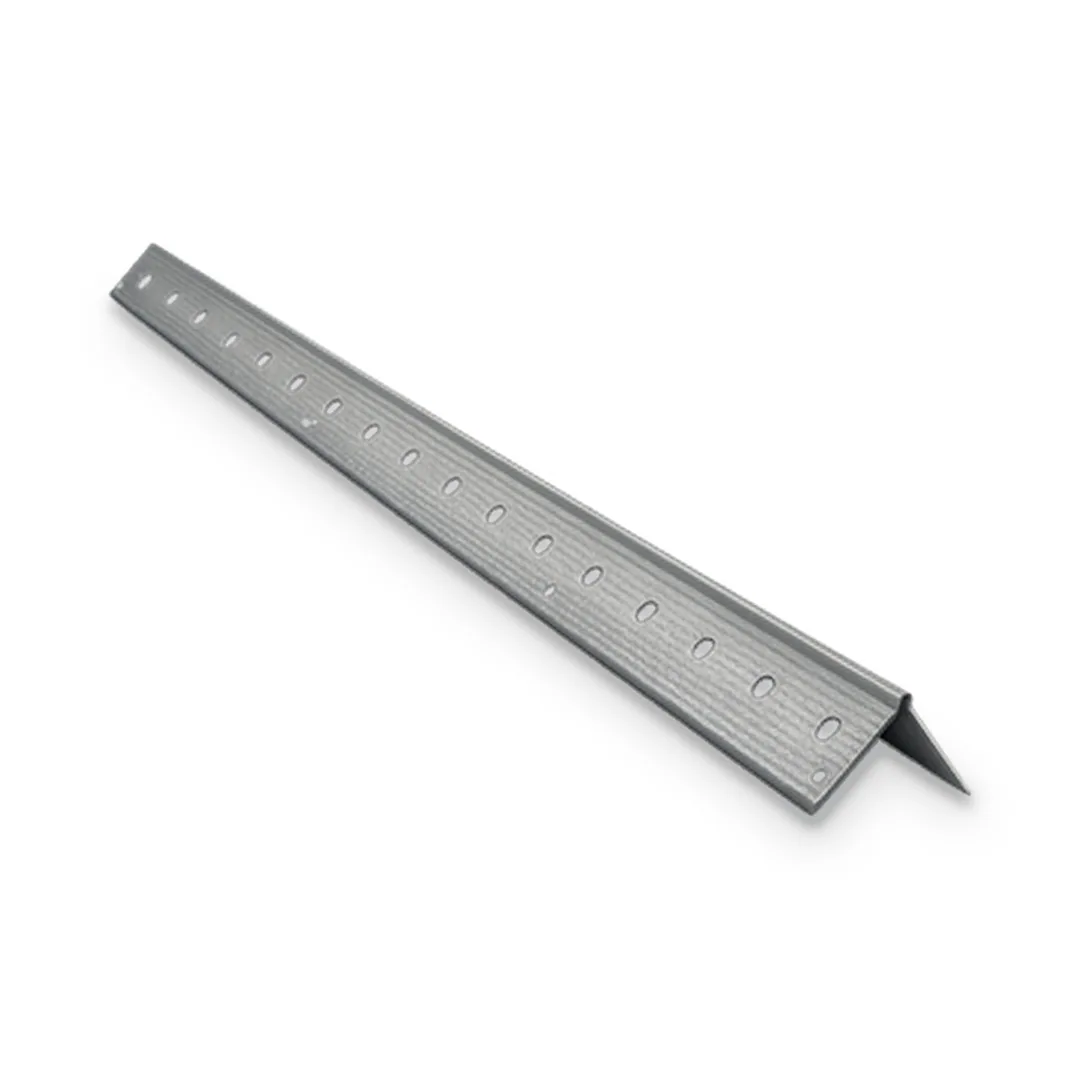
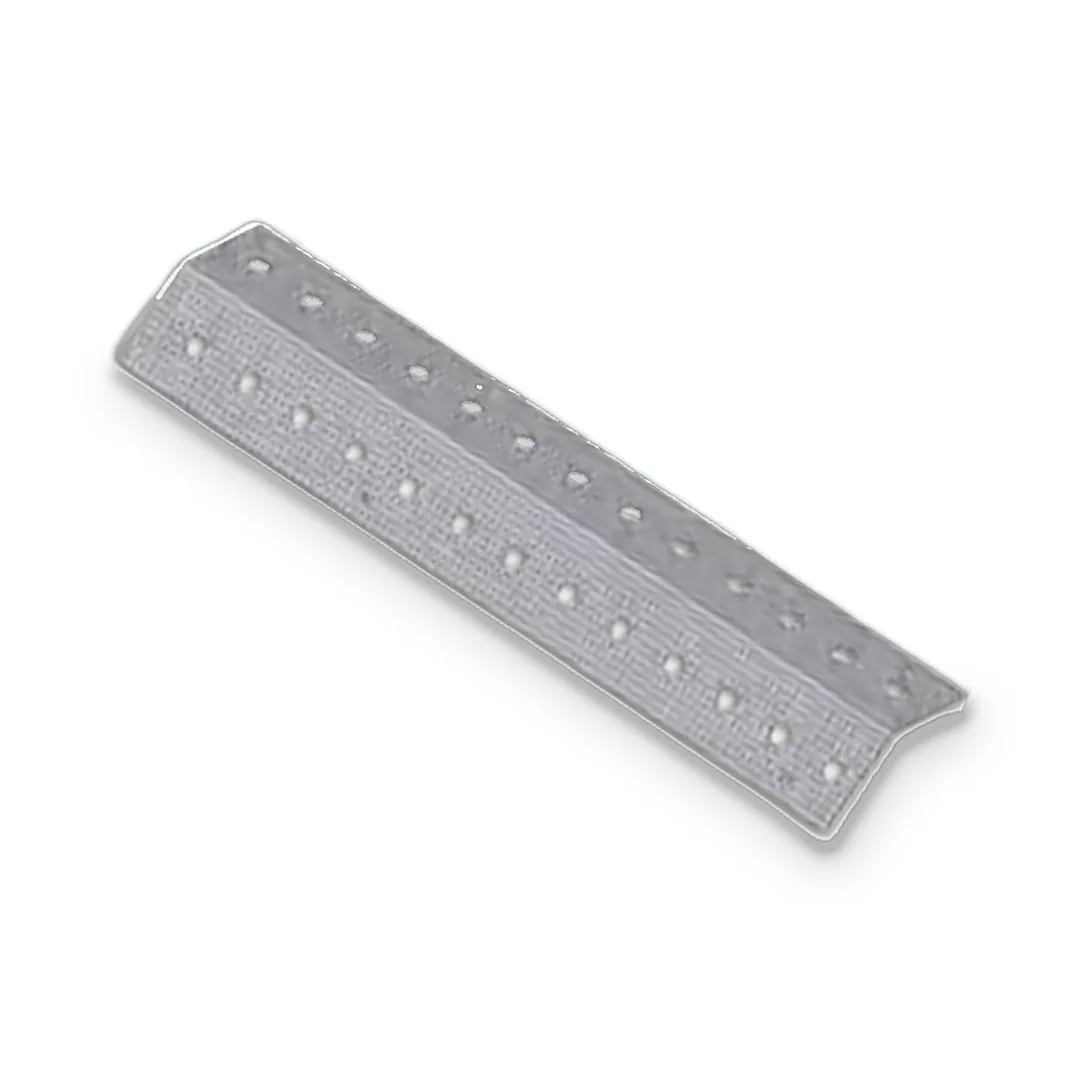
CB-90 is formed at 84° and CB-130 at 130°. Pressed onto a 90° or 135° corner, the flanges open up and spring back against the board, so the bead sits tight before it is fastened.
Galvanneal, key holes and knurled flanges
Both corner beads are 28 gauge galvanneal steel. Three details help the joint compound hold:
- a matte zinc-iron coating that takes compound and paint,
- key holes that let compound lock through the flange,
- a knurled flange surface that gives the compound a grip.
Sizing L trim and J trim
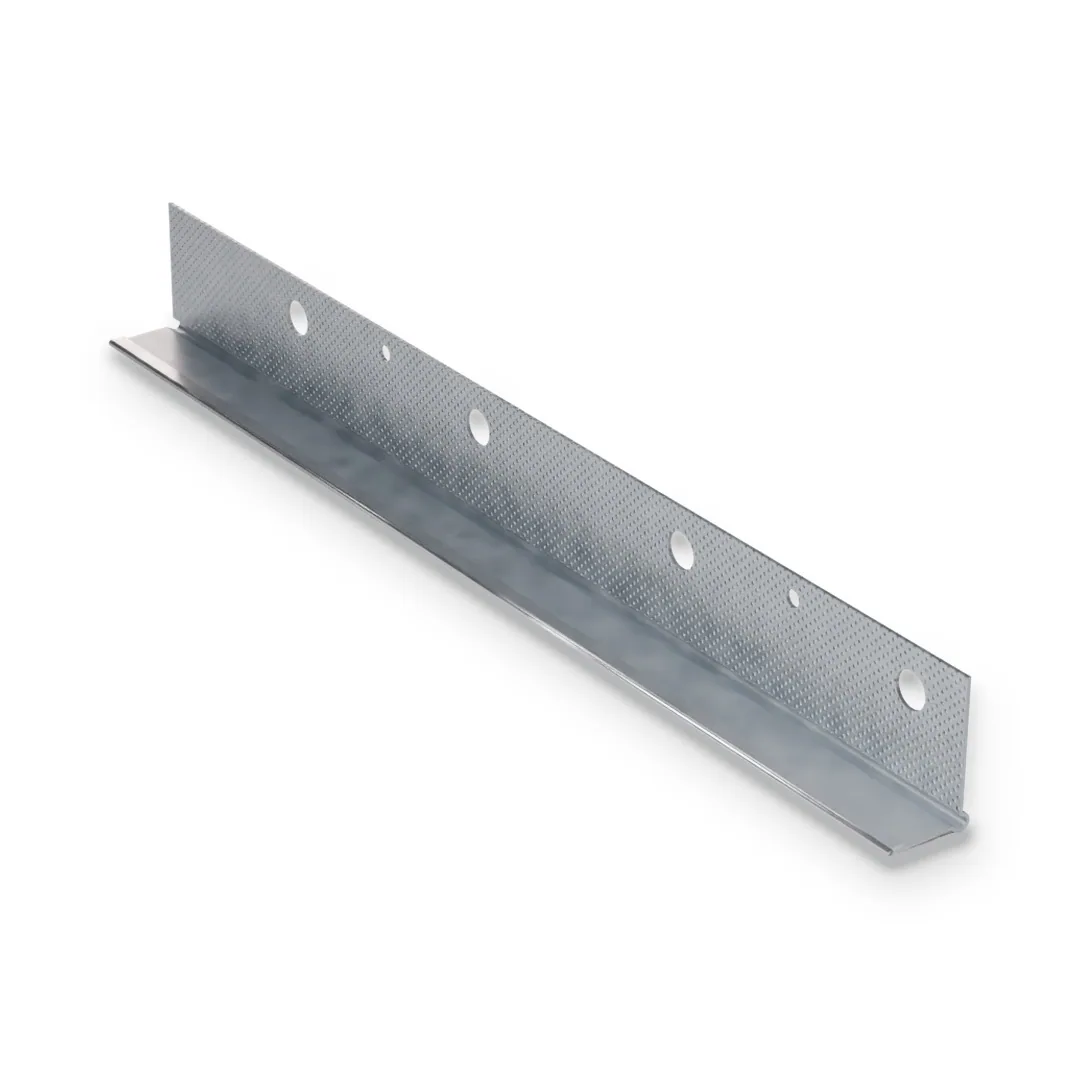
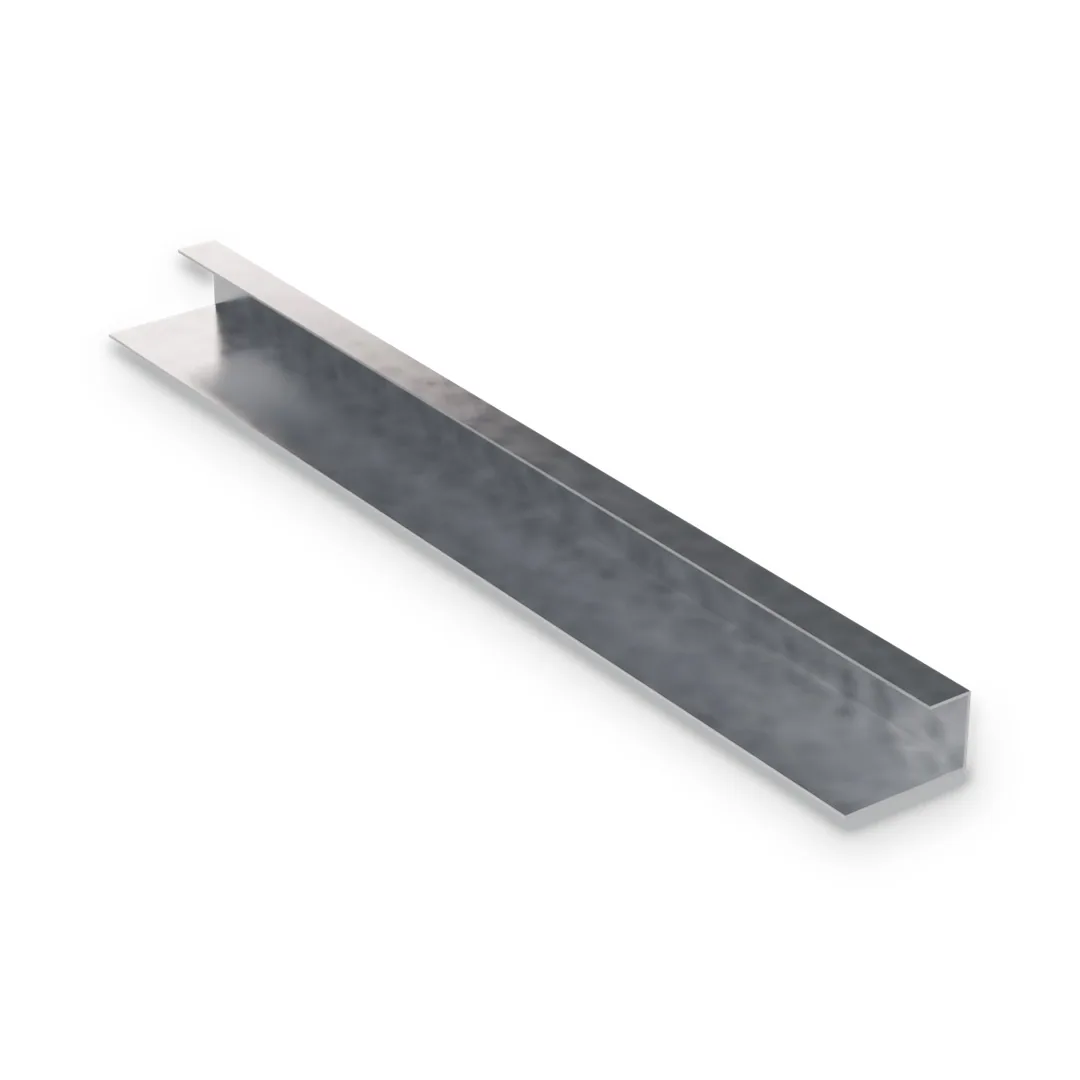
Trims are sized to the board, not the wall. Use 1/2" trim on 1/2" board and 5/8" on 5/8"; the wrong size leaves a gap, a step or a loose board. Both come in 8' and 10' lengths. For framed bulkhead and soffit edges behind the board, use L-track angle.
Common questions
The questions finishers ask most.
Which corner bead fits a 135° corner?
CB-130. It is formed at 130° so it springs tight onto a 135° corner.
J trim or L trim?
J trim caps the board end and needs no compound; it goes on before the board is fastened. L trim goes on after the board is hung and is finished with compound.
Is corner bead galvanized or galvanneal?
Our corner beads are galvanneal, which takes joint compound and paint better than bright galvanized steel.