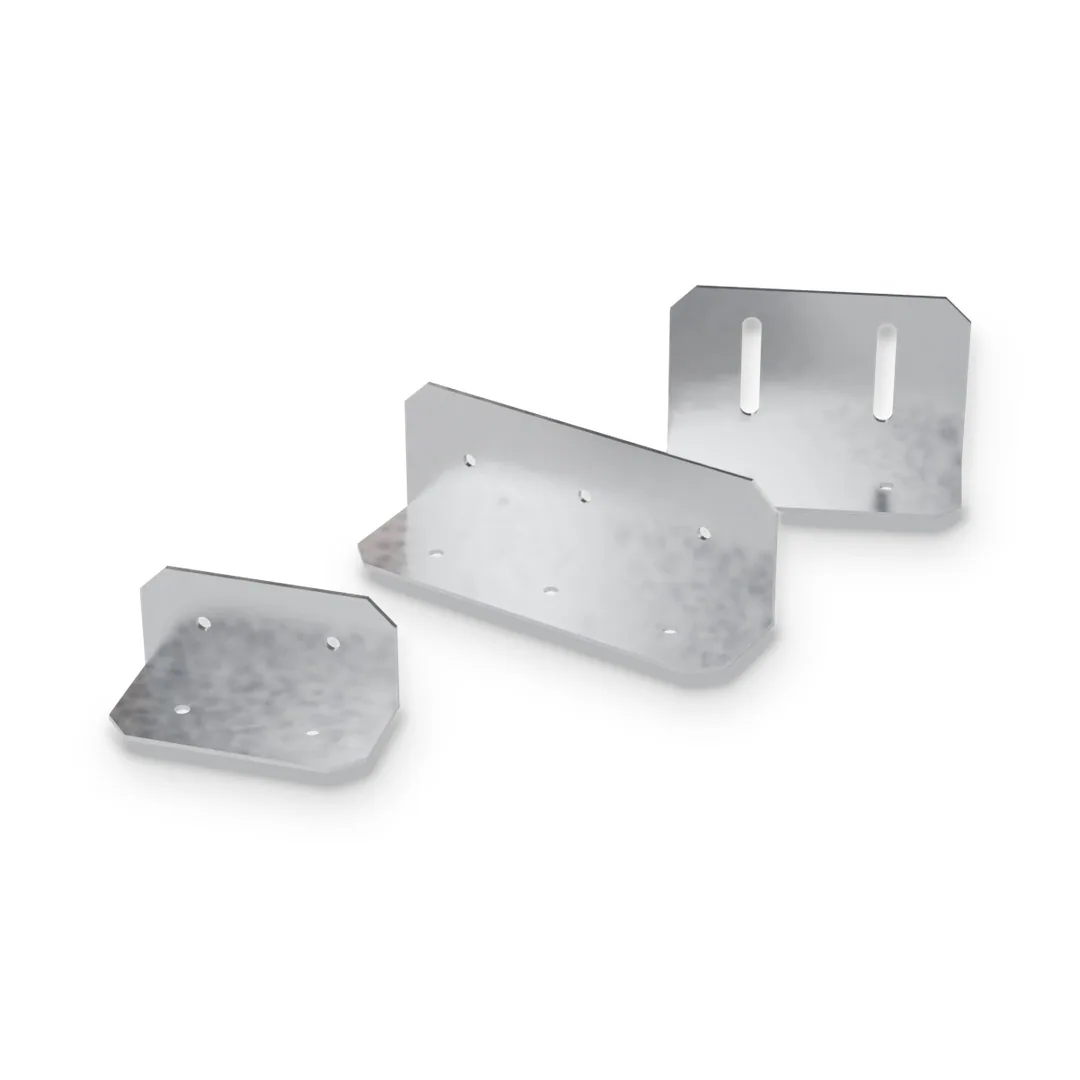
Four clip families
Every clip in the range belongs to one of four families, each for a different kind of joint.
| Family |
What it does |
Examples |
| Rigid (10 clips) |
Fixed joints, no movement |
Bridging clip, joist end clip, moment clip, anchor clip |
| Deflection & bypass (6) |
Holds the wall in line while the structure moves |
Top deflection clip, web slide clip, deflection strut |
| Masonry veneer (3) |
Ties brick back to the steel stud wall |
Side-mount and adjustable brick connectors, surface-mount brick tie |
| Specialty (4) |
One site, drywall, ceiling or acoustic job each |
Scaffold clip, drywall corner clip, sound isolation clip |
Find a clip by the job
Start from what the joint connects, then narrow to the clip.
- Bridging a stud wall: bridging clip or snap-on bridging clip, with bridging channel.
- Head of an interior wall under a moving slab: top deflection clip, or slotted deflection track.
- Curtain wall running past the slab edge: web slide, extended slide, flange hook or hybrid bypass clip.
- Brick over exterior insulation: surface-mount brick tie or adjustable brick connector.
- Sound-rated wall: sound isolation clip with furring channel.
Rigid or deflection
Use a deflection clip wherever the floor or roof above can move under load. Use rigid clips where the framing and the structure move together. Infill walls sit between slabs and use top deflection clips; bypass walls run past the slab edge and use slide clips.
Load data
Each clip has its own load values, which depend on the clip, the stud gauge and the fasteners. Send your connection details and we will return the data for the clips you are designing with.
Common questions
How the main clip types differ.
Deflection clip or slide clip?
A deflection clip sits at the top of a wall and lets the slab above move vertically. A slide clip ties a bypass stud to the slab edge through a slotted leg so the stud can slide.
Do I need a clip for bridging?
A standard stud takes a bridging clip at each stud, fixed to the bridging channel that runs through the knockouts.
Which clip ties brick veneer to a steel stud wall?
Side-mount or surface-mount brick connectors, or the adjustable connector for thicker sheathing and insulation, as the masonry design shows.